Dihydrotestosterone (DHT)
Dihydrotestosterone (DHT) is a hormone the body makes from testosterone using the 5-alpha-reductase enzymes, and in people with an inherited sensitivity it gradually shrinks scalp hair follicles, which is the main hormonal driver of pattern hair loss.
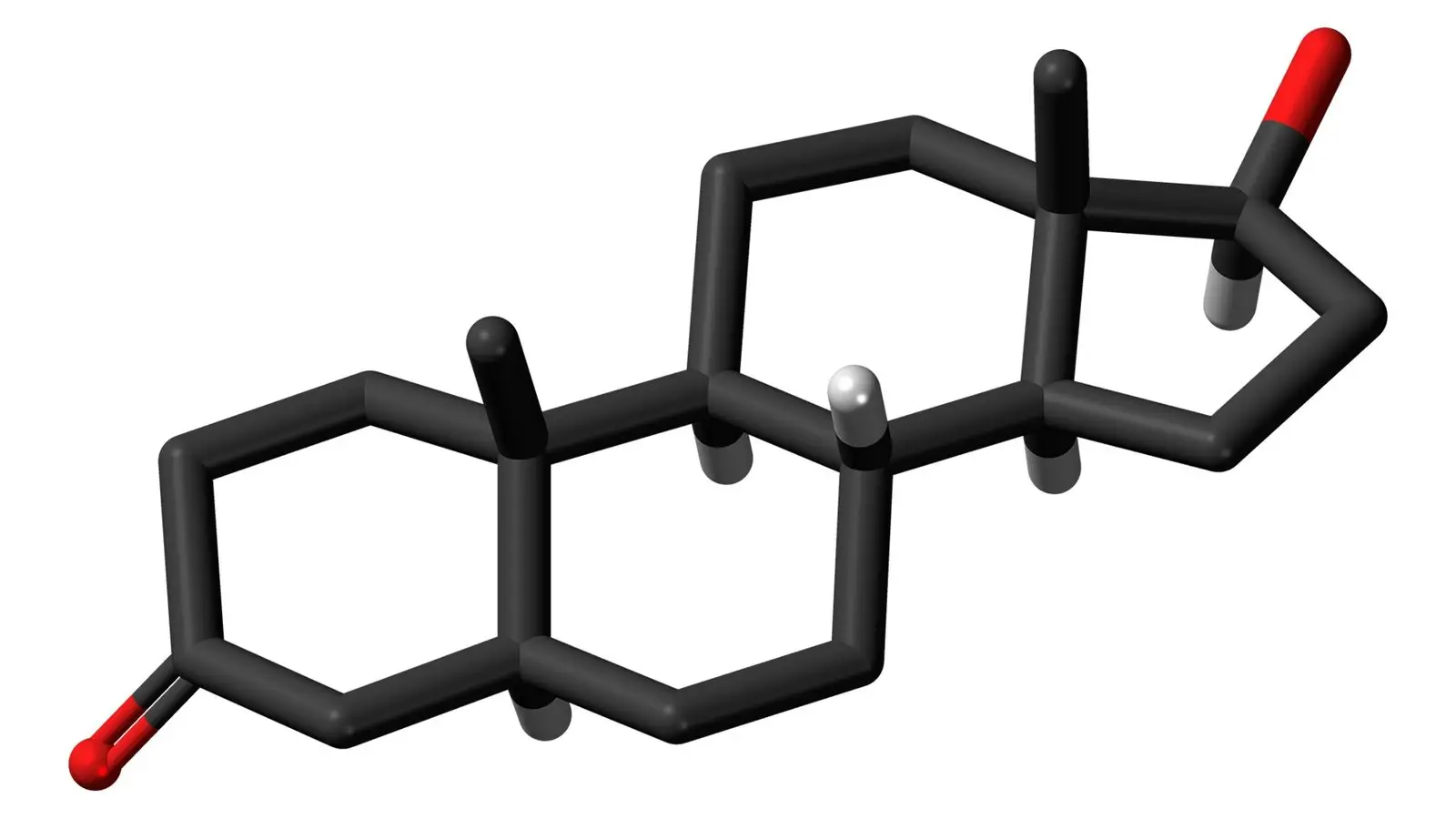
Full definition
Dihydrotestosterone (DHT) is an androgen, one of the so-called "male" sex hormones, made from testosterone inside tissues such as the skin, hair follicles and prostate by the 5-alpha-reductase enzymes. Laboratory work in the 1960s showed DHT to be a more potent androgen than testosterone itself (Azzouni and colleagues, Advances in Urology, 2012). It has essential normal jobs: before birth it drives development of the male external genitalia, which is why the finasteride and dutasteride SmPCs carry pregnancy warnings, and it supports beard and body hair. On the scalp the same hormone can work the other way. The British Association of Dermatologists (BAD) explains that in male pattern hair loss, DHT changes scalp follicles through a process called miniaturisation, so each new hair grows thinner and lighter until the follicle stops producing hair. Genes decide whose follicles respond like this, and the BAD notes that over 190 genes have been linked to it. Finasteride and dutasteride both lower DHT by blocking 5-alpha-reductase, and our page on how treatments work explains the mechanism. Both carry MHRA safety warnings: finasteride is associated with depression, suicidal thoughts and sexual side effects that may persist after stopping, and since May 2026 dutasteride carries a precautionary warning about mood changes (MHRA safety updates). Not treating is also a reasonable choice, because pattern hair loss is not harmful to physical health. A DHT blood test exists, but the BAD notes that male pattern hair loss is usually diagnosed from the pattern of loss and family history rather than from a blood result.
What it does not mean
DHT is not "bad testosterone" or a toxin to be flushed out. It is a normal hormone with jobs the body needs. Men born with an inherited lack of the type 2 enzyme rarely develop male pattern baldness, which shows how central DHT is to hair loss, but they are also born with under-developed external genitalia, which shows how central it is to normal development (Azzouni 2012). Lowering DHT with medicine is a clinical decision with recognised side effects, not a lifestyle tweak.
UK regulatory source
British Association of Dermatologists patient information leaflet, Hair loss: male pattern (androgenetic alopecia), June 2024; Propecia 1 mg SmPC section 5.1 (eMC); Azzouni F et al. The 5 alpha-reductase isozyme family: a review of basic biology and their role in human diseases. Adv Urol 2012 (PMID 22235201)